Learning a new language is one of the most enriching experiences for children, especially during their early years. Children between the ages of 3 and 7 are at a crucial stage of language development, where their brains are highly receptive to new words, sounds, and grammatical structures. Reading bilingual books not only helps them learn a new language but also promotes cognitive development, empathy, and creativity. Today, we want to highlight the importance of reading for children in this age group, especially when it comes to bilingual books, and recommend some fantastic options you can incorporate into their daily routine.
Why is Reading Important for Learning a New Language?
- Vocabulary Development: Children who read bilingual books have the opportunity to learn words in both languages in a contextualized way. By hearing and seeing the words repeatedly, children can associate words in one language with their equivalent in the other, reinforcing vocabulary in both languages.
- Improved Listening and Visual Comprehension: Exposure to two languages simultaneously allows children to develop both auditory and visual skills. They can hear the sounds of a language and see the written correspondence, helping them internalize the structure and rhythm of the language more effectively.
- Cultural Awareness: Through books, children also learn about the cultures associated with each language. Stories and characters can introduce them to customs, traditions, and values from different places, enriching their worldview.
- Building a Strong Foundation for Future Learning: Studies show that early second-language learning has long-term benefits, such as a better ability to learn additional languages later in life.
Recommended Books for Learning Spanish in a Fun Way
Here are some bilingual books you can use to encourage Spanish language learning for children aged 3 to 7:
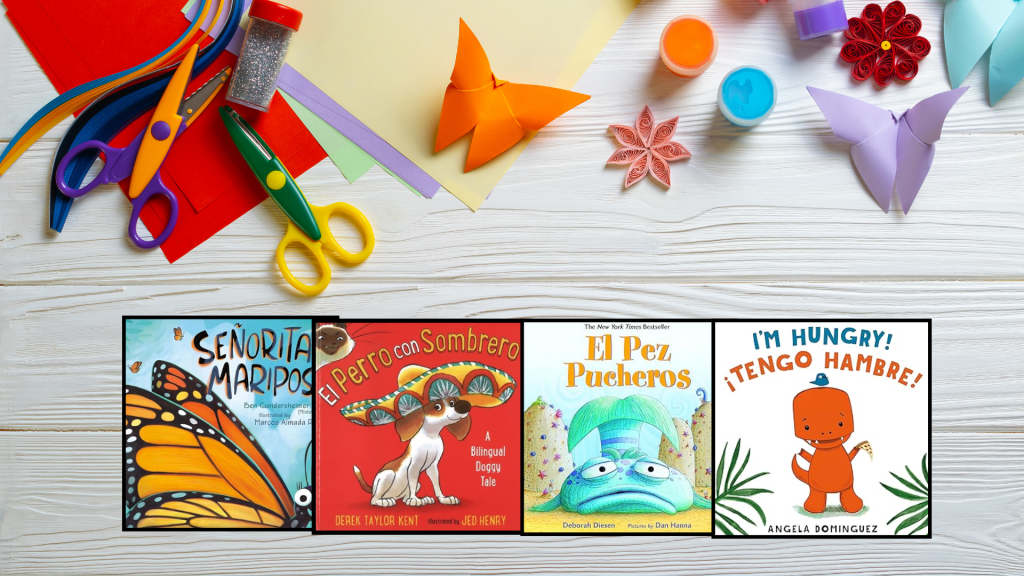
- Señorita Mariposa (Bilingual English-Spanish Edition)
This delightful book follows the adventures of a butterfly traveling the world, making it an excellent way to introduce children to vocabulary related to insects, nature, and travel. With colorful illustrations and simple text in both English and Spanish, Señorita Mariposa makes learning new words in Spanish fun and accessible. It’s perfect for younger children just starting to learn a new language. - El Perro con Sombrero: A Bilingual Doggy Tale (Spanish Edition)
El Perro con Sombrero is a charming story about a dog searching for his lost hat. This book is not only attractive because of its fun plot, but it also helps children learn vocabulary related to clothing, animals, and adventure. The bilingual format makes it easy for children to learn Spanish words while enjoying the story. - El Pez Pucheros / The Pout-Pout Fish (Spanish Edition)
Ideal for younger children, El Pez Pucheros teaches about emotions, especially how to handle sadness. Children learn in Spanish about how to change their attitude and view life more positively. Additionally, the bright illustrations capture children’s attention and keep them engaged while they listen and learn new words in both languages. - Lolo and Birdie: I’m Hungry! / ¡Tengo hambre! (Spanish Bilingual)
Lolo and Birdie: ¡Tengo hambre! is a great choice for introducing children to everyday phrases and basic food-related vocabulary. This book helps children understand simple concepts, such as asking for food, and encourages basic conversations in Spanish about food. Being bilingual, children can learn words and phrases in both their native language and Spanish simultaneously, which helps build their confidence.
Tips for Reading at Home
- Establish a Reading Routine: Reading every day, even for just a few minutes, helps create a routine where language learning becomes a natural part of the day.
- Read Aloud: As you read, make sure to pronounce the Spanish words clearly. Even if you’re not fluent, constant exposure is key to helping children get used to the sounds of the new language.
- Ask Questions About the Illustrations: Pictures play a key role in children’s books. After reading, you can ask questions about what they see in the illustrations, helping them connect concepts with words in Spanish.
- Make It Fun: Use different tones of voice, gestures, and facial expressions to make reading engaging and enjoyable. Children learn best when they are emotionally connected to what they are doing.
Reading bilingual books is one of the best ways to help children learn a new language effectively and funly. The books we’ve recommended are perfect for introducing children aged 3 to 7 to Spanish and provide an opportunity for them to develop language skills from an early age. By incorporating reading into their daily life, they are not only learning a new language but also acquiring social, cognitive, and emotional skills that will serve them throughout their lives.
Remember, language learning should be enjoyable and pressure-free. By making it a part of their daily routine with books like these, you’ll see how their interest in the language grows and how much they enjoy the process of learning something new.

 Bilingual at home